Smart Glasses for the Visually Impaired: Tech for Good


Introduction
In recent years, the intersection of technology and accessibility has witnessed remarkable advancements, fundamentally altering the landscape for individuals with disabilities. Among the most transformative innovations are smart glasses designed specifically for the visually impaired. These devices, once the stuff of science fiction, have rapidly evolved into practical, life-changing tools. By leveraging artificial intelligence, advanced computer vision, and miniaturized sensors, smart glasses are empowering the visually impaired community with unprecedented levels of independence and spatial awareness. As we navigate through 2026, the narrative surrounding wearable technology is shifting from mere convenience to profound empowerment, exemplifying the true essence of “Tech for Good.”
The Evolution of Assistive Wearables
The journey of assistive wearables for the visually impaired has been characterized by relentless innovation and a deep understanding of user needs. Early iterations of these devices were often bulky, tethered to heavy processing units, and limited in their functionality. They primarily relied on basic ultrasonic sensors to detect obstacles, providing rudimentary haptic or auditory feedback. However, the rapid miniaturization of electronic components and the exponential growth in processing power have paved the way for a new generation of sleek, unobtrusive smart glasses.
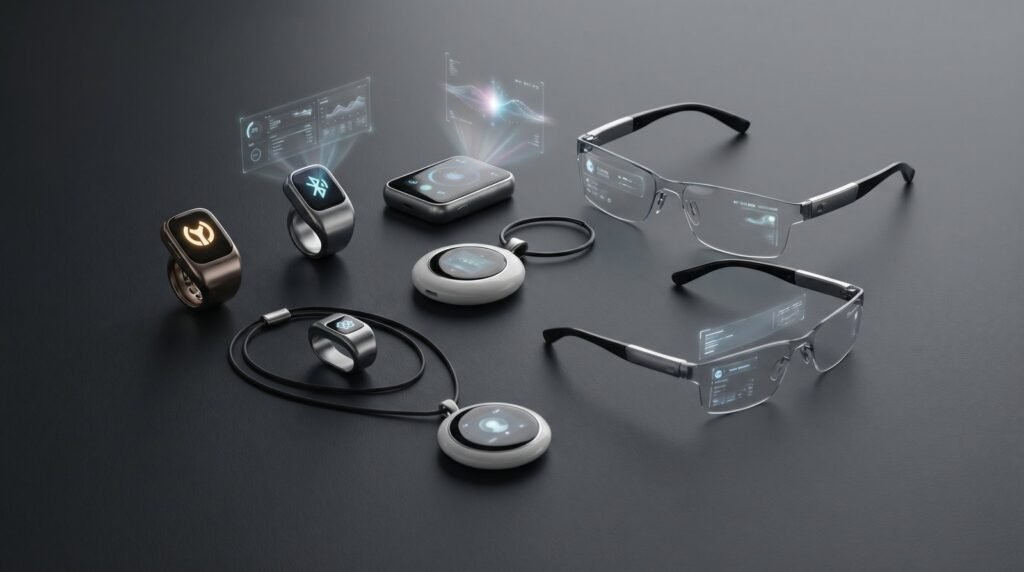
Today’s smart glasses are virtually indistinguishable from standard eyewear, yet they pack an astonishing array of technologies. High-resolution cameras, LiDAR sensors, and sophisticated AI algorithms work in tandem to interpret the user’s surroundings in real-time. This evolution is not just about hardware; it is equally about the software ecosystems that support these devices. Cloud connectivity and edge computing enable instantaneous data processing, ensuring that users receive timely and accurate information about their environment. The transition from passive obstacle detection to active environmental comprehension marks a significant milestone in the development of assistive technologies.
How Smart Glasses Empower the Visually Impaired
Real-Time Object and Text Recognition
One of the most profound capabilities of modern smart glasses is their ability to recognize objects and read text in real-time. Utilizing advanced optical character recognition (OCR) and machine learning models, these devices can instantly translate visual information into auditory feedback. For a visually impaired individual, this means the ability to read menus in a restaurant, identify products on a grocery store shelf, or navigate public transportation schedules without relying on external assistance. The integration of large language models (LLMs) has further refined this feature, allowing the glasses to not only read text but also summarize documents and answer contextual questions about the visual data they capture.
Enhanced Spatial Awareness and Navigation
Navigating unfamiliar environments has historically been a significant challenge for the visually impaired. Smart glasses address this issue by providing detailed, turn-by-turn navigation tailored specifically for pedestrian use. By combining GPS data with real-time obstacle detection, these devices can guide users safely through complex urban landscapes. Furthermore, the incorporation of spatial audio technology allows the glasses to deliver directional cues that intuitively guide the user. For instance, a warning about an approaching obstacle might sound as if it is originating from the exact location of the hazard, thereby enhancing the user’s spatial awareness and reaction time.
Facial Recognition and Social Interaction
Social interactions rely heavily on visual cues, such as recognizing faces and interpreting facial expressions. Smart glasses are bridging this gap by incorporating facial recognition technology. When a known individual approaches, the glasses can discreetly whisper their name into the user’s ear, facilitating smoother and more confident social engagements. Some advanced models are even capable of analyzing facial expressions to provide the user with insights into the emotional state of their conversational partner. This feature not only enhances personal relationships but also fosters a greater sense of inclusion in social and professional settings.
Recent Breakthroughs and Market Trends in 2026
The year 2026 has been a watershed moment for the assistive smart glasses market, characterized by several groundbreaking developments. Leading tech companies and specialized startups alike have unveiled devices that push the boundaries of what is possible. A notable trend is the integration of multimodal AI, which allows smart glasses to process visual, auditory, and contextual data simultaneously. This holistic approach enables the devices to provide more nuanced and accurate assistance, such as identifying a specific brand of cereal in a crowded aisle or describing the layout of a newly entered room.
Another significant breakthrough is the improvement in battery life and thermal management. Historically, the intensive processing required for real-time computer vision led to rapid battery depletion and uncomfortable heat generation. However, the advent of ultra-low-power AI chips has mitigated these issues, allowing users to wear their smart glasses comfortably throughout the day. Furthermore, the market has seen a push towards greater affordability and accessibility. While early models were prohibitively expensive, economies of scale and increased competition have driven prices down, making this life-changing technology accessible to a broader demographic.
Challenges and Future Prospects
Despite the remarkable progress, the widespread adoption of smart glasses for the visually impaired still faces several challenges. Privacy concerns remain a paramount issue, as these devices continuously capture video and audio data from their surroundings. Manufacturers must implement robust data encryption and anonymization protocols to protect both the user and the public. Additionally, there is a continuous need for user-centric design. The technology must be intuitive and customizable, catering to the diverse needs and varying degrees of visual impairment within the community.
Looking ahead, the future of assistive smart glasses is incredibly promising. The ongoing convergence of augmented reality (AR), 5G connectivity, and advanced AI will unlock even more sophisticated functionalities. We can anticipate features such as real-time language translation of visual text, seamless integration with smart city infrastructures for enhanced navigation, and even more refined social interaction tools. As these technologies mature, smart glasses will transition from being specialized assistive devices to ubiquitous tools that enhance the human experience for everyone, regardless of their visual acuity.
Conclusion
Smart glasses for the visually impaired represent a shining example of how technology can be harnessed to create a more inclusive and equitable world. By providing real-time environmental comprehension, enhanced navigation, and improved social interaction, these devices are fundamentally transforming the lives of millions. As we continue to witness rapid advancements in AI and wearable technology in 2026 and beyond, the potential for these devices to empower individuals and foster independence is boundless. The narrative of “Tech for Good” is not just a slogan; it is a tangible reality being worn on the faces of those who are reclaiming their autonomy and navigating the world with newfound confidence.
 English
 简体中文
简体中文 繁體中文
繁體中文 日本語
日本語
Responses